Captain William Henry Glover married Ann Maria Dillon-Walpole on 3 May 1809. Captain Glover with his wife and stepson (Edward Walpole) emigrated from Dublin in late1823 via Maderia and Rio, eventually arriving on 7 May 1824 in Hobart Van Dieman’s Land). Captain Glover was an officer of the 31st Regiment on Foot. As a result of his officer status he was afforded the role of Police Magistrate to the Sorell district, settling first in Sorell in 1824 and eventually settling at Horsecroft, Pawleena.
After acquiring the property (with a land area of over 400 acres), Captain Glover built the homestead and stone barn in 1826 and a stone walled sheep fold (extremely rare in Tasmania now). It is clear that in building Horsecroft, that he would have been assigned convicts to build the house and barn and farm the property. Mathew Brady with his gang, commenced his bushranging activities in 1824 robbing homesteads and engaging in shootouts with police, soldiers and settlers in and around the region.
Matthew Brady
In November 1825, the Brady gang's most audacious feat was the capture of the township of Sorell. A dozen Hobart Town citizens as well as Captain Glover had assembled near Sorell for a dinner, and in the resulting raid were taken and marched to the town where several soldiers, lately returned from searching for the bushranger, were surprised, disarmed and lodged in the lock-up. Captain Glover was included in those being locked up. They then released all the Convicts and Brady led the town in a celebration .The bushrangers remained in charge of the settlement during the night but subsequently escaped and travelled to Launceston. Historian Robert Cox provides a detailed and accurate depiction of the events surrounding Brady’s raid on Sorell in his book, Baptised in Blood. In addition, in a lengthy letter to the Mercury on 18 September 1873 Elizabeth Glover (Captain Glover’s daughter), wrote a lengthy defence and account of the raid on Sorell by Brady and his gang.


Captain Glover and his wife Ann had 3 children of their own, William Henry (Junior), Elizabeth Ann and Charles Alexander all of whom were born at Horsecroft. Captain Glover in establishing Horsecroft as one of the finest mixed grazing and crop farms in the district, with an acreage of nearly 500 acres, passed away at the property around 1855 and was buried in Sorell. In an article in the Mercury of 4 July 1860 it records that on 28 June, being the anniversary of the Coronation of Queen Victoria, that a celebration (Royal salute fired by guns) by the people of Sorell to demonstrate their loyalty took place at Horsecroft led by William Henry Junior and Charles Glover, assisted by neighboring farmers including Mr George Marshall as well as a representative of the Hobart Town Volunteer Artillery Corps.


William Henry Glover (Junior) and his sister Elizabeth remained at Horsecroft and continued to farm the property for another 13 years. It is not clear from the records uncovered what happened to Captain Glover’s wife, or his youngest son Charles. William Glover Junior struggled to ensure the profitability of the farm, trying various means including establishment of a lime kiln and even leasing out the farm to make it pay.


Again the records are unclear what happened to William Glover Junior but it is clear that eventually due to increasing debts the property was eventually sold to a Louisa Nicholas the wife of Alfred Nicholas of Sorell around March 1868, but she was unable to take possession of the property on 3 March 1868 due to Elizabeth Glover’s refusal to leave. Horsecroft was purchased for 2,250 pounds via her trustee, with 560 pounds paid as a deposit. Elizabeth refused on the grounds she wanted to remain in the house built by her parents with a couple of acres of land but eventually and reluctantly left the property on 10 June 1868.


As a result of this process, an ensuing court case occurred before the Supreme Court. The court records document the issues of concern regarding the state of the property, given it has been severely neglected and the loss therefore in value and income to Mrs Nicholas. It is not clear beyond what the judge required of the jury to consider (ie. loss of income and associated costs) as to the outcome of the court case. Again it is not clear what happened to Elizabeth Glover following her eviction from Horsecroft.


Horsecroft thereafter was occupied by Mr George Percival Marshall (who already had another significant farming property in the district known as Noble Farm). It is understood Mr Marshall had leased the property from Mrs Nicholas. In an advertisement in the Mercury of 26 January 1872, Roberts and Co (Roberts Real Estate), advertised the well known and valuable agricultural and pastoral estate of Horsecroft. In the advertisement it stated that Mr Nicholas had substantially upgraded the property, including expending a large sum of money to make the homestead and appointments complete.


The house containing 11 rooms, a store (I assume the stone barn), servants rooms, dairy, farm offices, a six stall stable (it remains on site, although not on the title along with a shearing shed, both in poor condition), sheds for cows, a three room cottage, etc. The outcome of the sale is unknown at this time but it did sell to another farmer, who was at one stage also a member of the Legislative Council. In 1927 Max Pearce’s father bought Horsecroft and continued to farm the property.


Max Pearce was 5 years old at the time he and his family moved onto the estate. In an interview with ABC Rural Australia (Tasmanian Country Hour), he outlined how the property which consisted of 121 acres of cultivated land and 400 acres of grazing land was farmed. Max and his brother continued to farm the property for the next 80 years. Max, having met and married Joan, lived and raised their family, including their daughter Nancy at the property, until in late 2007 when David Mitchell, along with his wife bought the property.


By the time David bought Horsecroft the land had been subdivided down to the remaining 2 ½ acres of land. David thereafter commenced restoring the house. The house as purchased contained 8 rooms, hall and verandah plus the old stone barn. Horsecroft is a typical early (colonial regency property) of the era with classical proportions to the front earliest part of the house, with 6 panel cedar front door, and fanlight, dual 10 pane French windows opening up to the flagstone lined verandah, cedar, baltic, and huon pine joinery .


The cedar arch in the front hall is typical of early Australian Colonial properties. The flooring mostly in the house is original wide baltic pine (front hall) and butt jointed pit sawn Tas Oak and/or Blackwood boards. It has 5 working fireplaces, the front two rooms mantles are rare and in sandstone. The mantle in the ensuite bathroom being a mix of cedar and tas oak is extremely rare and undoubtedly hand made complete with inset cedar diamonds. It has 6 and/or 4 panel cedar doors in the front half of the original convict built homestead, along with cedar architraves, wide reveals and huon and/or blackwood skirtings.


The front half of the homestead is the original homestead and is constructed of convict brick (rendered in ashlar pattern) with flagstone lined verandah floor. The front half of the homestead is double brick internal walls with mostly original lime morter render. The rear part of the house is 2 story and constructed of lime rendered field stone and weatherboards. There is even an original convict brick bread oven on the property and while in poor condition, could be restored for use and a large stone 2 storey barn, in poor condition and an original stone lined 5m deep well.


The fireplace in the Master bedroom has imported English hearth tiles while the tiles used in the bathroom shower bay and kitchen are handpainted imported from Tunisia. The claw and ball bath is an original cast iron bath and was has been restored. The vanity in the bath has antique tiles as a splashback. All joinery in the house has been handstripped and French-polished, while the floors have been hand sanded and coated with Tung oil. The front part of the house is insulated in the ceiling, while in the front lounge/second bedroom also has underfloor insulation.


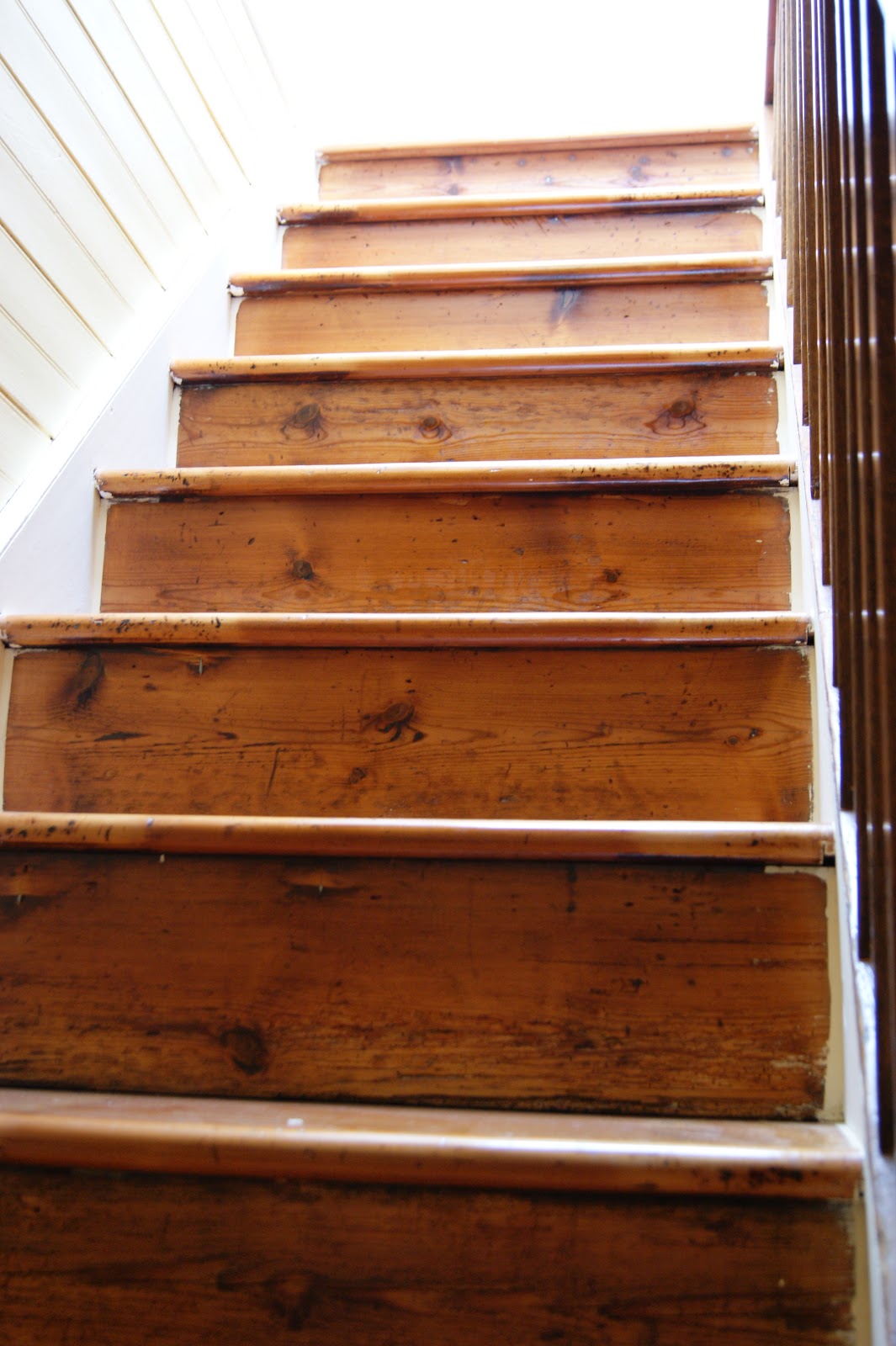
The stairs to the upper rear two bedrooms is made from baltic and kauri pine, complete with a small storage cupboard under the stairs. The house is fully re-wired and re-plumbed. The floors in the front half of the house and parts of the kitchen have been rebuilt with new piers and bearers as needed but original flooring retained where possible. A new baltic floor has been installed in the front lounge/second bedroom, and new baltic flooring is available to replace the floor in the rear lounge and is to be included in the sale of the property.
While the garden is in poor condition, it contains a range of remnant deciduous trees (including a large walnut and other fruit trees), a huge range of bulbs (daffodils, lilliums etc), hawthorns, as well as a heritage listed very large radiata pine.
Unfortunately, David has had to place Horsecroft on the market to sell and the property has recently been sold. David and his family & friends have done a magnificent job with their restoration work and have well and truly breathed new life into this magnificent heritage property that dates back to the earliest years of the Hobart colony and it is hoped that new owners of Horsecroft will continue the overall restoration of the site with the same passion that David has displayed.
This is certainly one of my absolute favorite heritage properties that I have had the pleasure of visiting. Being one of the very early properties in the Tasmanian Convict & Colonial era, it has a really wonderful feel about and if the walls could talk, I’m sure the stories would be fantastic.
Main Text & Information Source – David Mitchell’s Personal Research Files
Photographs – Geoff Ritchie & David Mitchell
I would personally like to thank David Mitchell for his kindness & generosity for initially contacting me about Horsecroft and then for inviting me to visit his wonderful heritage property and allowing me to photograph his home to my hearts content and especially for allowing me to use his wonderful historic research to tell the fascinating story of Horsecroft as well as supplying me with some of his wonderful photographs. Thank you so much, David! Congratulations on all your sensational efforts to bring Horsecroft back to its former glory.