Monday, 14 March 2016

Former Bellerive Institute Building

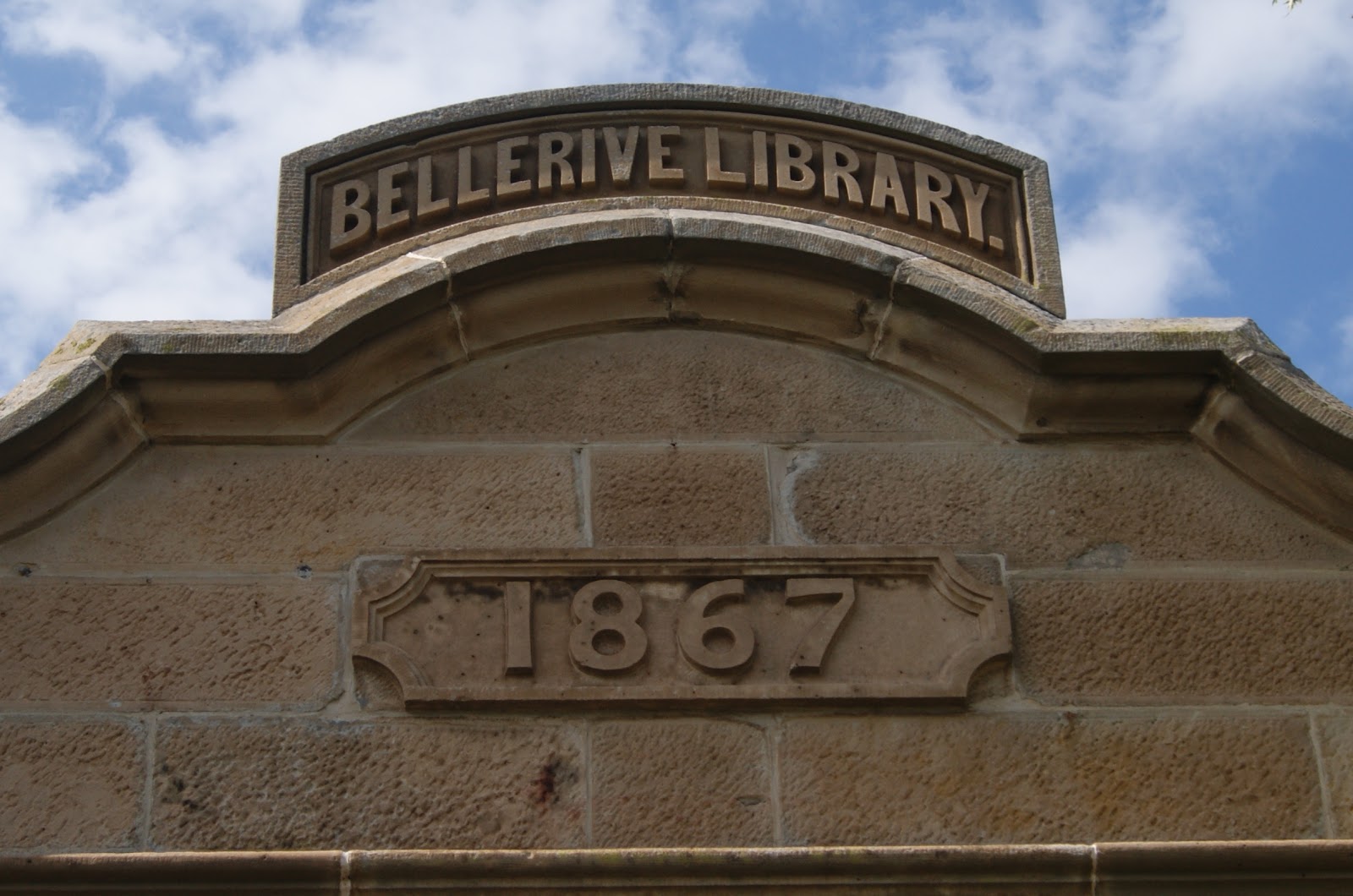
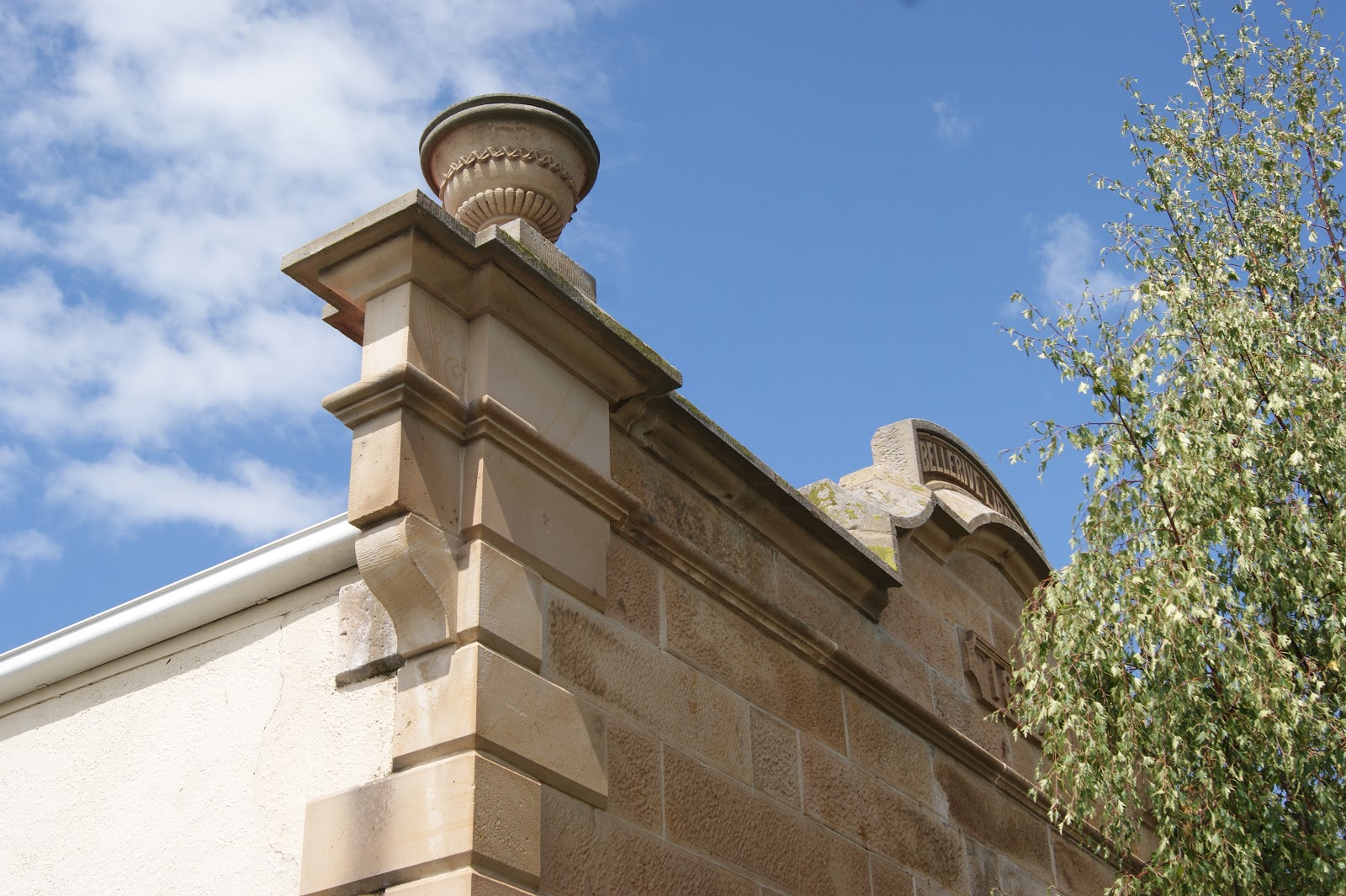
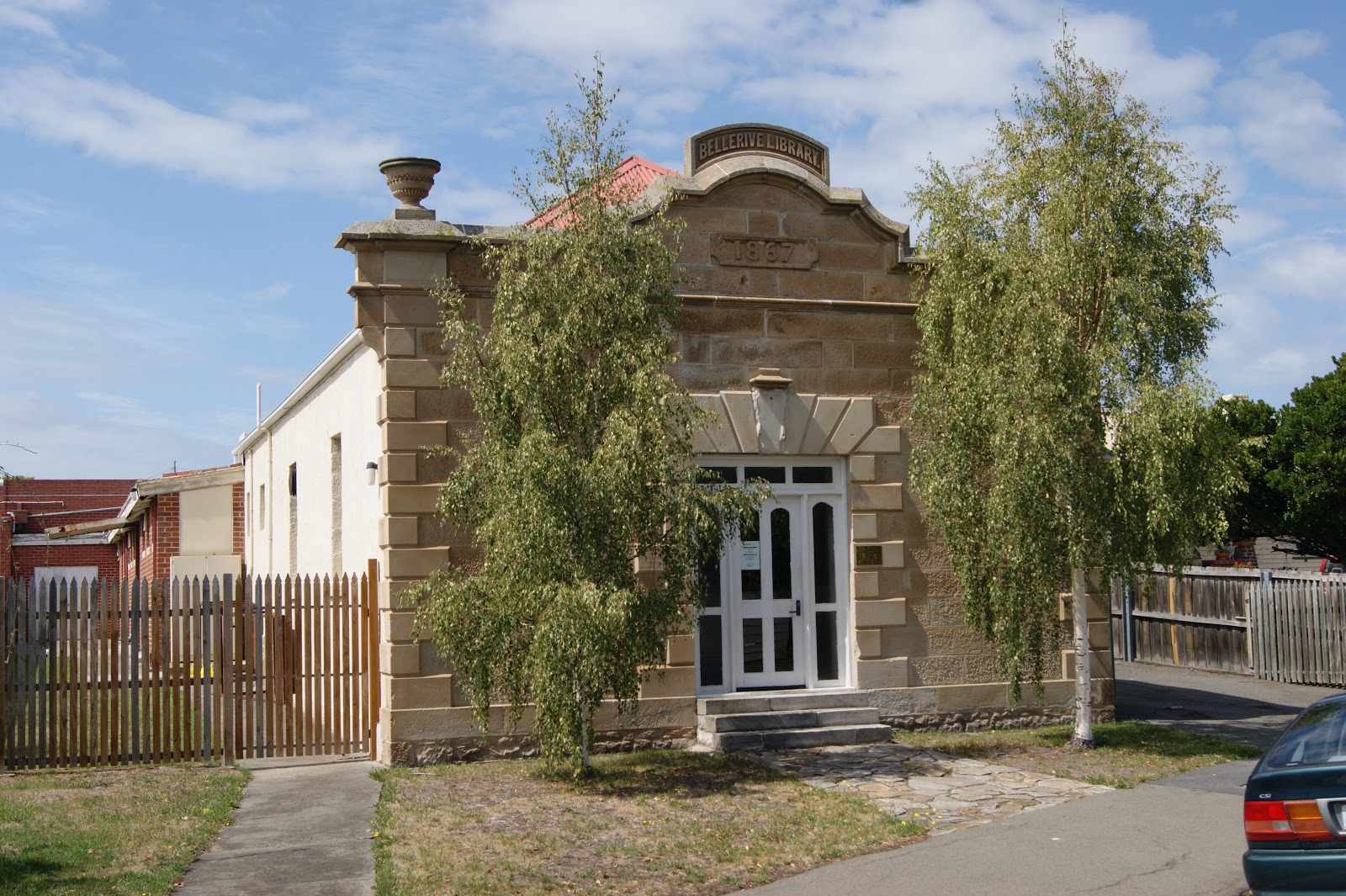
The Bellerive Institute was built in 1867 and is largely the result of the philanthropy of one man. Until it's construction, most public gatherings had to be accommodated at one of the local pubs and there had been long held feeling in the district that there was a need for a more suitable venue which could be used for lectures and social meetings.

Thomas Westbrook generously offered to erect a building at his own expense, if the community could obtain a suitable piece of land, sources a suitable supply of furniture and fittings and provide a good library of books. Garrett Maum generously donated a parcel of land and within a matter of a few months a very nice and spacious building had been erected.

The Institute was formally opened in May 1867 with a lecture followed by a selection of vocal & instrumental music. For the convenience of visitors who had journeyed across from Hobart, arrangements were made for the steamer, Kangaroo, to make a special trip back from Bellerive to Hobart at 10pm that evening. Attendees were informed that the object of the Institute was to promote the dissemination of useful knowledge and to improve the moral & intellectual well-being of Bellerive's residents. There was a call for the donation of books to allow the library to be formed but only quality works would be considered. - "The light trash with which ordinary library shelves are currently crowded are not required"  Westbrook handed over the deed of conveyance to a board of trustees and his exceptional generosity was recognized with three hearty cheers and proceedings were closed with the singing of the National Anthem.

In addition to lectures, dramatic reading and musical entertainment, the Institute was used by community groups such as the rowing clubs and the brass band. the library was ultimately established and subscriptions were maintained as low as possible so as not to create a barrier to those seeking instruction, education & amusement.

The Institute became Bellerive's main venue for public meetings until the Clarence Council constructed their town hall in 1928. In a effort to increase their membership, the library was moved to a more central location in 1930 and the Institute building was leased and later sold to the Clarence sub-branch of the Returned Servicemen's League. Today the building still stands, is in very good condition and is used by a religious organisation as a church.

Main Text & Information Source - 
"The Story of Bellerive - Street By Street" - Donald Howatson 2015

Wednesday, 9 March 2016

Old Bootmakers Shop, Bothwell

This is an interesting little shop that dates back to the late 1890's. Charles Medhurst originally operated the shop as early as 1897 in its original location in the grounds of Elizabeth House, further along High Street from its current location.

For generations, Bothwell families had their footwear hand made by Charles and his son, Clarrie. The building was first moved from Elizabeth House to the grounds of the Fall Of Clyde Inn before being moved back into High Street, just down the road from its original position. At the time of this final move, the fabric of the building was restored and displays set up inside.

The interior of the shop can be inspected by appointment. (Ph: 03 6259 5649) or enquire at the Bothwell Visitors Information Centre

Main Text & Information Sources - 
Interpretive Sign at the Site
"Browse Historic Bothwell" brochure - Bothwell Historic Society


Sunday, 6 March 2016

Old Congregational Church, Kempton

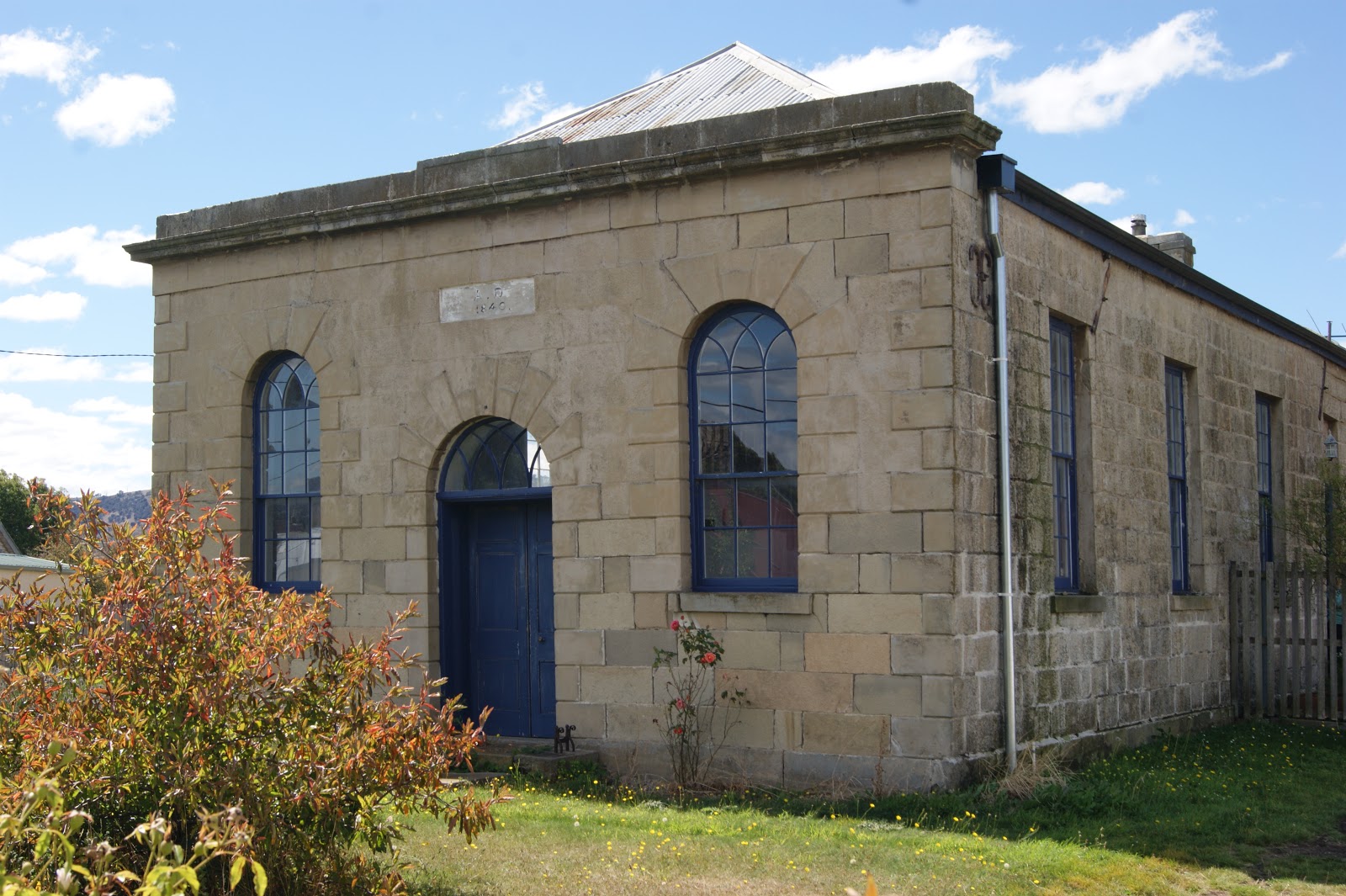
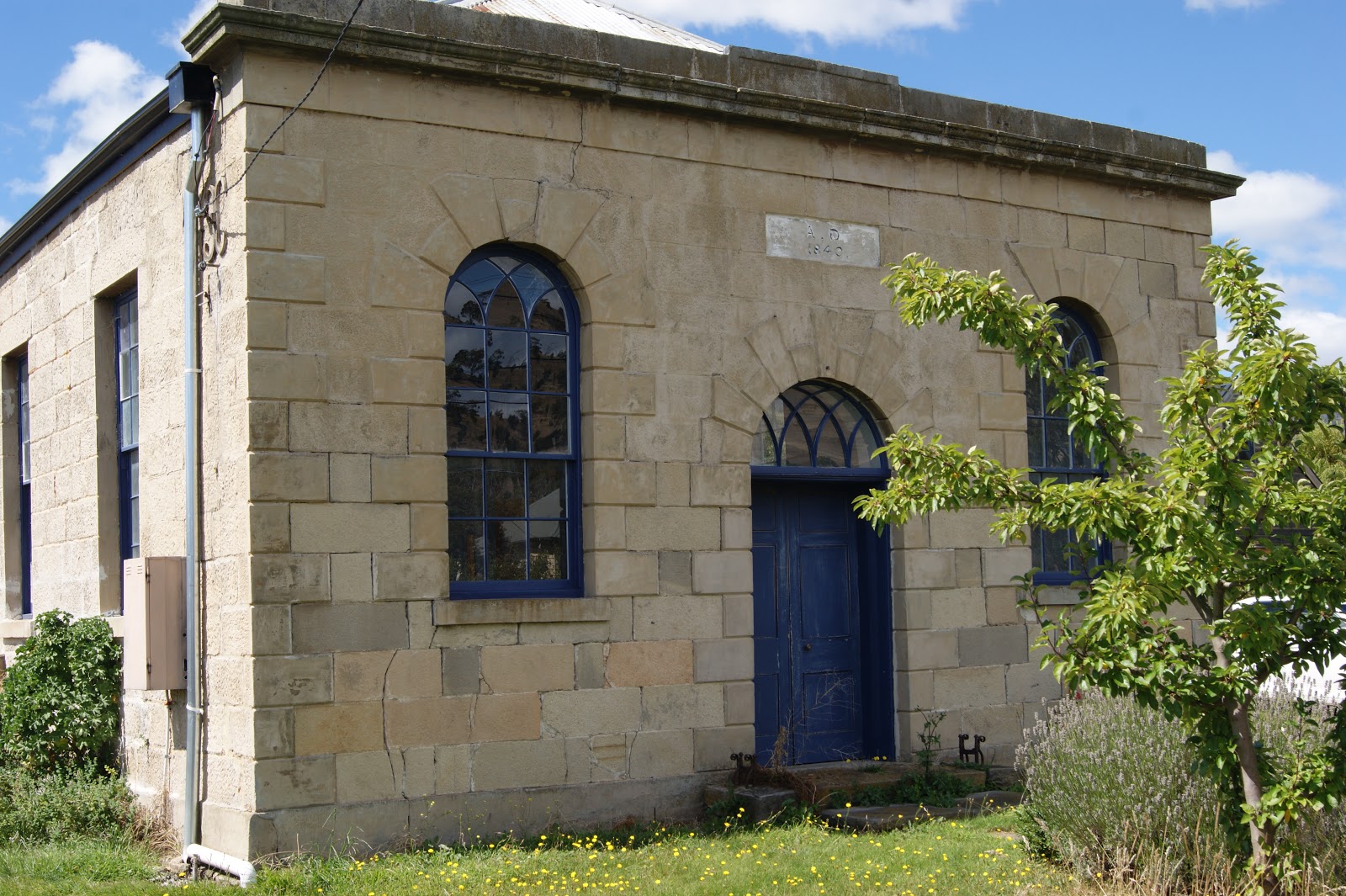
The Congregational Church is a simple stone Georgian building that was built in 1840 by the Van Diemen's Land Missionary Society at a cost of 500 pounds under the leadership of the Reverend Joseph Beazley. It is said that the material used to construct the chapel had been taken from a ruined Church of England. Beazley had chosen Green Ponds as the headquarters for the district with chapels also constructed at The Hunting Ground, Bagdad & Richmond.

Reverend Beazley worked tirelessly to build up large congregations for all the chapels. A sabbath school was instituted with further additions made to the rear of the chapel in order to create a school room, meeting room and vestry. This creates an unusual feature for the chapel of having two high windows at the rear and the incorporation of a chimney.

In 1840, many of the so called "Canadian Rebels", who were working at the Green Ponds Probation Station at the time, attended church at this chapel and the Reverend Beazley was 'most pleased with them".

The accompanying cemetery behind the chapel contains the graves of many of the early Green Ponds settlers including Phillip Pitt, William Henry Ellis & Joseph Johnson.

The chapel remains intact and in good condition and it is an integral part of the main road streetscape of Kempton. Although the chapel building is no longer used as a church, it remains in private hands as a private residence.

Main Text, Information & Historic Photo Sources - 
Interpretive Sign at the site
Australian Heritage Database

Wednesday, 2 March 2016

Franklin House, Franklin Village

Britton Jones arrived at Hobart Town as a convict on the ship “Dromedary” on 10th January 1820. He had been transported for the theft of 72 lb of lead valued at 6 shillings. His convict records show that his occupation was waterman and he was aged 20. In 1822 he married Sophia Kirk, the daughter of an ex-convict and the thirteenth white girl born on the island. After being granted a certificate of freedom in 1825 at the expiration of his sentence, Jones and his family moved to near Longford.

They moved a number of times before moving to Long Meadows (the original name of Franklin Village) where he became the licensee of the “Sir William Wallace Inn" in 1834. The inn had previously been known as “The Punchbowl”, built in 1830 and owned by Charles Lucas who lost his license for harbouring assigned servants. As an innkeeper and brewer, Britton Jones delivered his beer and spirits around Launceston’s muddy streets in a bullock cart.

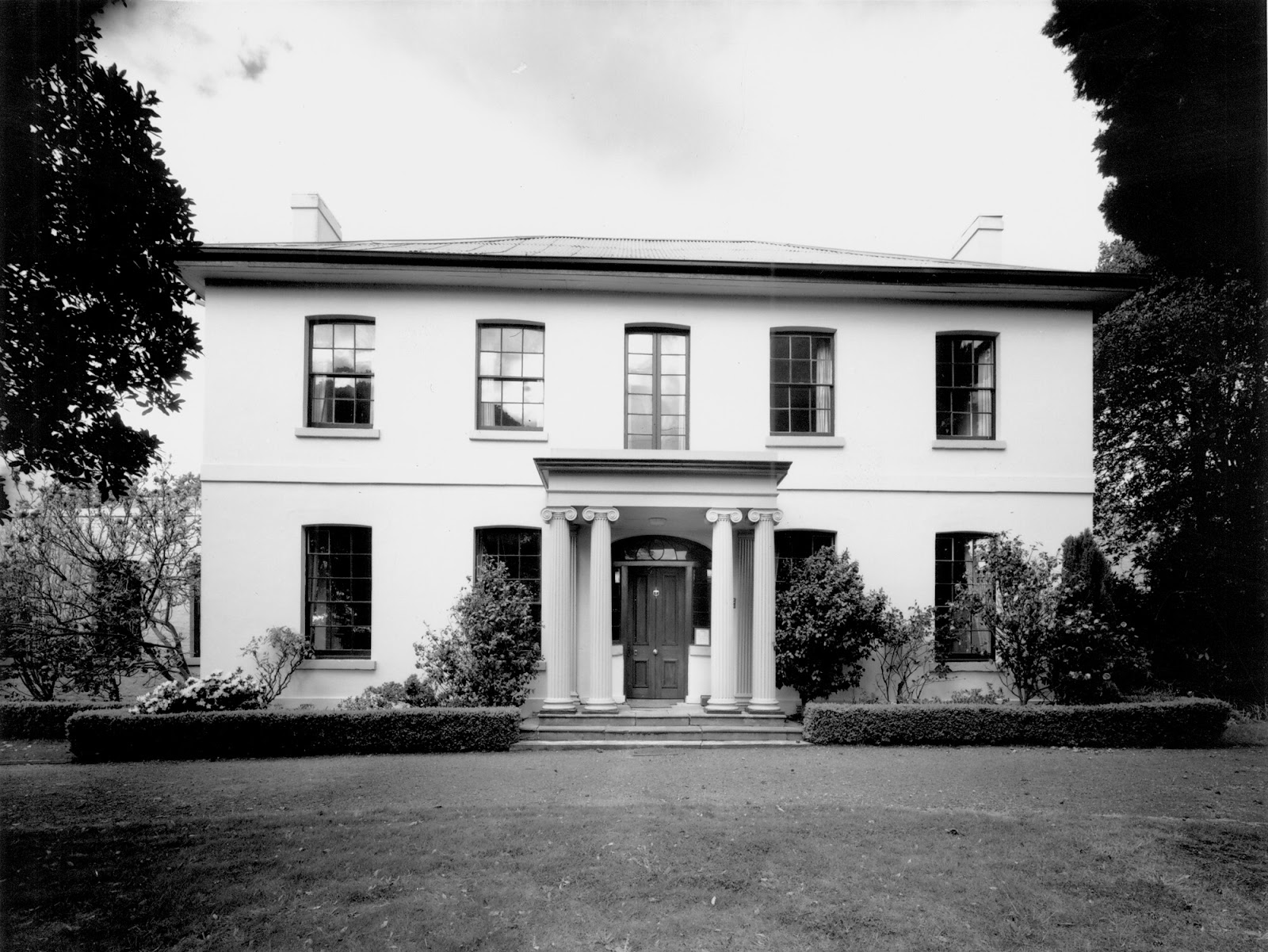
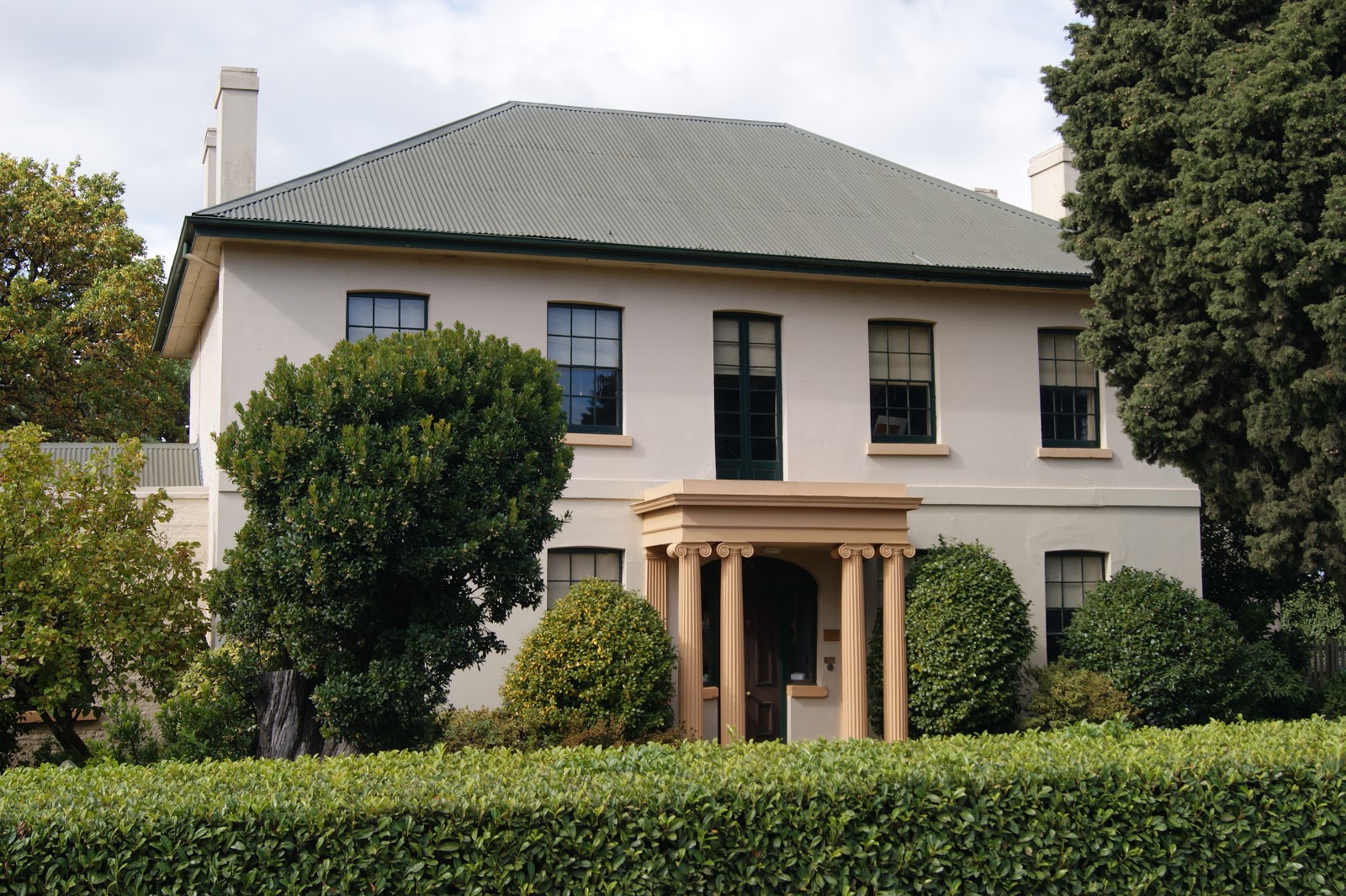
In 1834, Britton Jones had built the property now known as “Greycliffe” and originally called it “Prospect Hill” By 1838, Britton Jones purchased 10 acres of land almost opposite the Sir William Wallace Inn and constructed what is now known as Franklin House, an early Victorian Greek Revival style building constructed by convict labour from bricks made on the site. The interior joinery was made from Australian cedar bought in especially from northern New South Wales.

Built as a gentleman’s modest town house, it was leased on completion to solicitor Mr G. Horne as a family residence. In 1842 it was leased by an English schoolmaster, Mr William Keeler Hawkes who ultimately purchased the house in 1848 for the sum of 800 pounds. By that time the property had been sub-divided and now amounted to about 6 acres. Hawkes added a single storey schoolroom and established a boarding school for boys. The school was known as the “Classical & Commercial School” or more popularly known as “Mr Hawkes Academy” and catered for up to 26 students. It operated until about 1866.

The Hawkes family occupied Franklin House until 1888 when the last of Hawkes’ three maiden sister, Charlotte, died there. The house then passed to a succession of owners who used the house as a family home – Mr & Mrs William Lyon Shaw Greer (1888 – 1910) and Mr & Mrs Charles Kelly (1919 – 1941).Both these families took a leading part in community affairs at Franklin Village.

The house changed hands twice before 1960, firstly being owned by Mr H L Von See (1941 – 1945) and then by the Poole family (1945 – 1960). By this time the property was run down and was offered for sale as a light industrial site. It was considered to be more valuable if sold for that purpose as light industry was rapidly establishing in the Franklin Village area.

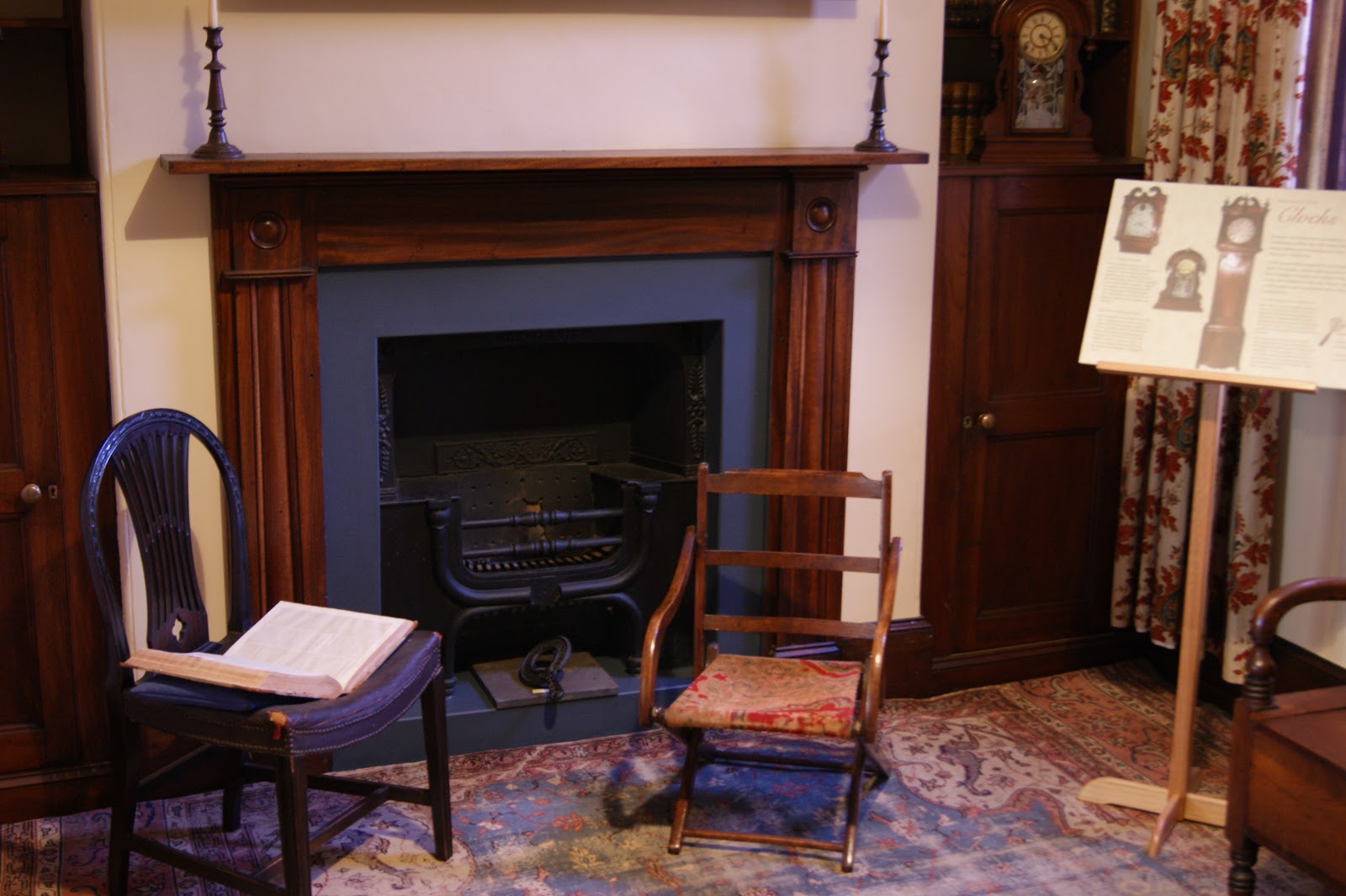
However, a group of concerned Launceston citizens believed the house should be saved for its heritage value and raised money to purchase, restore and furnish the house as a signature house in Franklin Village. The house, which had been known as “The Hollies” was renamed “Franklin House” to honour the memory of Sir John Franklin. It was opened to the public as a house museum in October 1961. The group that had formed to save the building, led by Mrs Edith Craig & Mr Dick Green became the National Trust in Tasmania.

Franklin House has become the state headquarters of the National Trust. We have this wonderful group of people to thank for their foresight and understanding as to the heritage value of Franklin House and their efforts to firstly rescue the building from almost certain demolition and then for the time, patience and skill of those people who were involved in the magnificent restoration of the property.

It is certainly a stunning property and a major part of the Franklin Village streetscape and history. Well worth stopping in and taking the time to explore this magnificent building and surrounding grounds!

Main Text & Information Source – 
“Franklin Village – A Journey in Time” – Terry Childs (Revised Edition 2013)
Available to purchase at the Franklin House onsite shop

Historic Photos –